
Lead with experience
Help shape the future of Metro DPS.
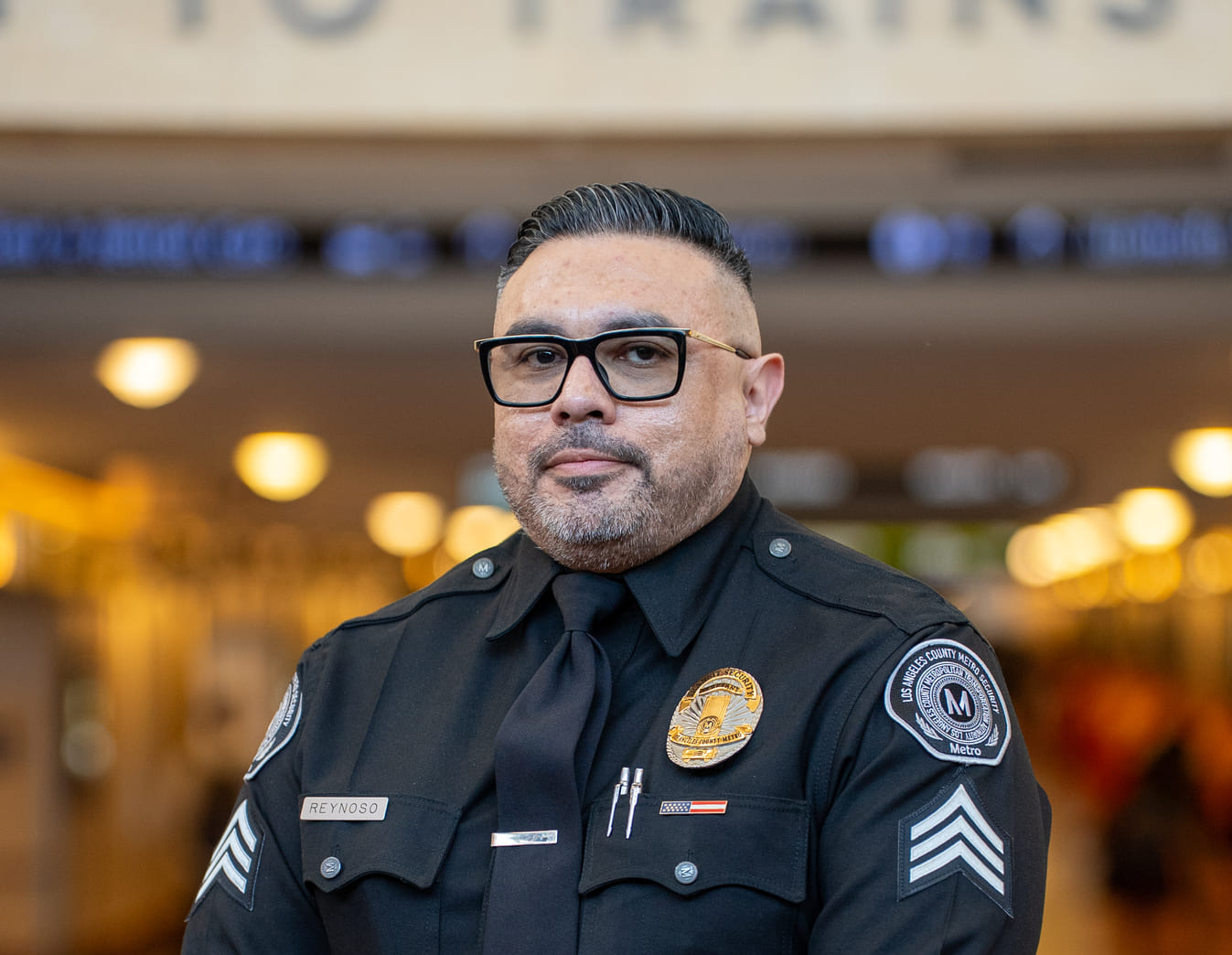
As a Police Sergeant with Metro DPS, you'll lead sworn personnel across one of the nation's largest public transit systems while helping build a new department from the ground up. You'll supervise patrol operations, guide investigations, mentor officers, and play a key role in developing the standards, training, and culture that will define Metro DPS for years to come.
Police Sergeant
earn up to $180,835 per year
Police Sergeants supervise Transit Police Officers while overseeing patrol operations, investigations, emergency response, and community engagement throughout the Metro transit system. In addition to providing day-to-day leadership, Sergeants train and mentor officers, support recruitment efforts, coordinate with partner law enforcement agencies, and help develop policies and operational standards that strengthen public safety across Metro.
This is a sworn, armed leadership position for experienced California peace officers who are ready to lead teams, develop personnel, and make a lasting impact on a growing police department.
Bachelor's degree in Criminal Justice, Criminology, Public Administration, or a related field (or qualifying equivalent experience)
Two years of peace officer experience protecting life and property
California POST Intermediate Certificate
- Valid California Class C Driver License with a satisfactory driving record
Ability to remain firearm qualified
Successfully pass a background investigation, psychological evaluation, and medical examination
Subject to Federal Transit Administration (FTA) drug and alcohol testing, including random testing
benefits
As a full-time sworn police officer with Metro DPS, you’ll receive a comprehensive and flexible benefits package designed to support you and your family. Through LA Metro, you can customize your coverage to fit your needs, whether that means enhancing your benefits, scaling back what you don’t need or even waiving certain options for added credit. It’s a benefits program built around choice, value and the people who keep Metro moving safely every day.
Retirement & Pension
Sworn Officer Pension Plan (LACMTA):
Plan Formula: 2.7% at age 57 (PEPRA-compliant)
This is not a PERS plan. It is a pension plan through LACMTA, but establishes reciprocity with CalPERS.
Vesting: Vesting requires five years of service and reaching age 50 to receive a retirement pension.
For non-vested members with fewer than five years of service, contributions may be refunded upon separation.
Contributions & Reciprocity: Total contribution rate is 27.74% (13.75% employee / 13.99% LACMTA).
Reciprocity is established with CalPERS and other California public agencies.
Medical Insurance
Four Medical Plan Options:
Blue Cross PPO
Blue Cross HMO
Kaiser HMO
Opt out of medical coverage and receive cash in lieu
Includes Vision (VSP or Kaiser Vision)
Dental Insurance
Delta Dental PPO
Delta Dental DHMO
Dental Health Service DHMO
Opt out of dental coverage and receive cash in lieu
Time Off With Pay (TOWP)
Accrued biweekly, can cash out at 100% when leaving.
In addition to the TOWP benefit, employees also receive 12 paid holidays per year.
Tuition Reimbursement
After probation:
Undergraduate: up to $250 per unit
Graduate: up to $375 per unit
Life Insurance
Metro pays: 1x annual salary
Option to purchase up to 4x salary
Flexible Spending Accounts (Pre-Tax)
Healthcare FSA: up to $3,400
Dependent Care FSA: up to $7,500
401(k) & 457 Plans (Non-Matching)
Up to $24,500 each plan
Age 50+: $32,500 each plan
Roth options available
Transportation Benefits
Up to $260/month transit subsidy
$20/month bike incentive
Free rides on Metro buses & trains (employee + eligible dependents)
On-Site Perks at Metro headquarters
Credit Union
Fitness Center
- Day Care
Cafeteria
hiring steps
Our hiring process is clear, supportive and designed to prepare you for success as a police officer.
1. Application and Screening
After receiving your application submittal via NeoGov, applications will be screened for minimum qualifications. If you are successful, you will be invited to participate in the next step. Applicants who are not selected to move forward will be notified.
2. Oral Interview
A panel of Metro personnel will assess the candidate’s communication, decision-making and understanding of law enforcement. Be prepared to answer questions regarding your background, motivations and interest in Metro’s Department of Public Safety (DPS).
3. Livescan – fingerprinting
You will be required to undergo fingerprinting, which includes state and federal criminal history checks, as well as a review of the Child Abuse Central Index.
4. Background Investigation
A completed Personal History Questionnaire must be submitted prior to the initiation of a background check. The background check follows the California Commission on Peace Officers Standards and Training (POST) requirements. It includes a full review of criminal, driving, credit, military and work history, plus reference checks to assess your suitability for a career in law enforcement.
Honesty is the best policy. At Metro DPS, we value honesty and integrity above all else. It is natural to have experiences that you may view as challenging or unfavorable; however, attempting to omit or misrepresent information can have serious consequences. We strongly advise taking the time to thoroughly review your background and experiences before proceeding.
5. Psychological Evaluation
This POST mandated evaluation confirms you are psychologically fit for duty. Exams are conducted by licensed professionals and assesses your readiness to perform the essential functions of a police officer.
6. Medical Exam
The medical examination is conducted in accordance with POST standards to determine a candidate’s ability to perform the essential job functions of a police officer.
7. Final Interview
Candidates who advance to the final stage of pre-employment will be invited for a final interview with the Chief of Police (or designee).
8. Post hiring: Field Training Program
For both academy graduates and lateral hires, field training will provide officers training on department-specific procedures, patrol operations and policies. All officers must pass the evaluation phases of the field training program.